We recently wanted Qreate to publish one useful message in our own Discord server every morning.
The request sounded harmless: collect the important news, check what changed, turn it into a short briefing, add one recommendation and post it for the team at 09:00. Just a message that should appear before anyone has to ask where it is.
Then we tried to describe which kind of Discord bot would normally handle it.
Was it a feed bot because it needed fresh sources? A scheduler because it ran every morning? An AI bot because the information had to be filtered and rewritten? Or an automation bot because several steps depended on one another?
The honest answer was all of them, which is a slightly absurd number of products for one morning post.
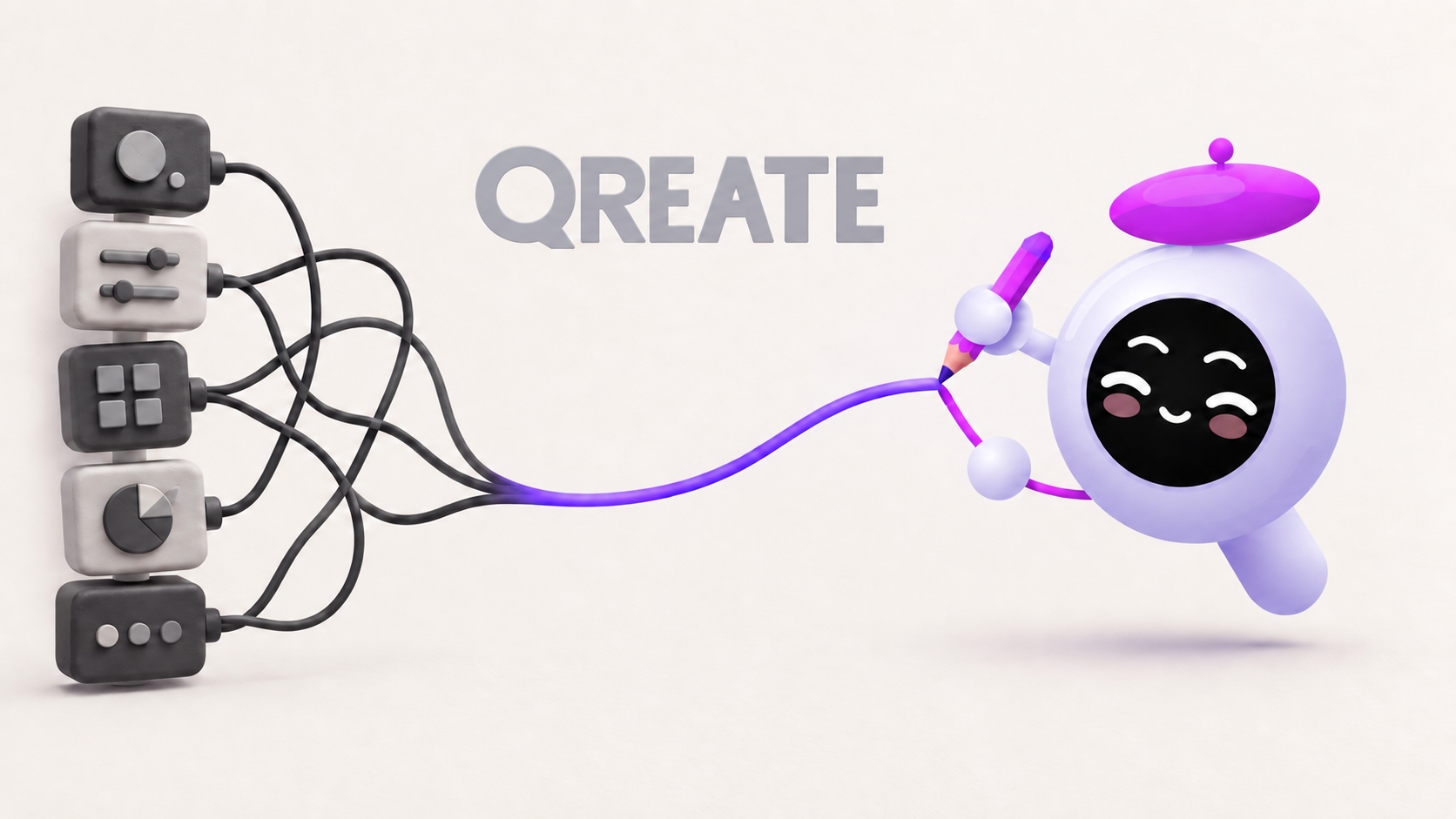
Qreate already had the parts. The work was connecting them: a schedule starts the job, the briefing checks current information, Q makes it worth reading, an approval can stop it, and the result reaches the right channel. We use this system ourselves, so when it fails, nobody gets to call it an interesting edge case and go home.
That small workflow exposed the problem we have with the most famous Discord bots. It is not that MEE6, Dyno, Carl-bot, Sapphire or ProBot have too few features. In several cases, the problem is almost the opposite.
They have spent years adding features to a model that is running out of road.
The bot stack solved yesterday’s problem
The first generation of serious Discord tooling fixed an obvious gap. Discord gave communities rooms, roles and permissions, but owners still needed moderation, welcome messages, reaction roles, tickets, logging, levels, feeds and a small miracle every time permissions broke.
So people assembled a stack. Dyno handled moderation. Carl-bot handled reaction roles and tags. MEE6 or ProBot handled engagement and welcome. Ticket Tool handled support. Another bot posted social feeds. Each addition solved a real problem and quietly created a new dashboard, another permission set and one more thing the next administrator would be afraid to remove.
The all-in-one bots improved that. Carl-bot, Dyno, MEE6, Sapphire and ProBot each combine substantial pieces of server management under one roof.
This is the strongest version of the old idea: instead of installing seven bots, install one very large bot.
It was a good answer. It is no longer the best one.
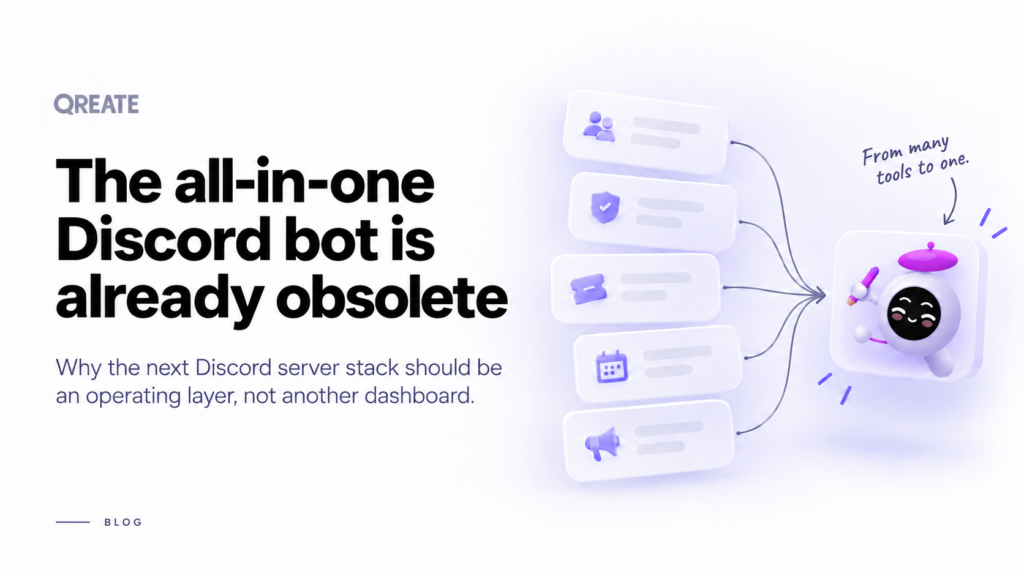
Because thirty modules inside one dashboard are still thirty modules. The administrator still has to translate an outcome into settings, work out which feature owns which part and connect whatever can be connected. The bot stack became a menu stack.
If your definition of customization is giving someone 140 switches and enough documentation to understand them, we disagree about what customizable means.
One message should not need an architecture meeting
Our morning briefing is not special. Real Discord work crosses feature boundaries constantly.
When a suspicious account joins, you may need a stricter check, a temporary role, limited access, a staff log and a clean route into normal onboarding. A tournament may need registration, roles, player rooms, reminders and a result post. When a member suggestion ships, the ticket stage, author, approval flow and public thank-you must understand the same event.
Traditional multipurpose bots can handle several pieces, which is why the limitation is easy to miss. The feature exists, the comparison table receives another green tick, and the owner still does the integration work in their head.
Qreate starts from the job instead.
Tell Q to create a Friday tournament with registration, reminders and a final result. Ask it to make onboarding stricter for suspicious accounts without slowing everyone else down. Tell it that support requests keep disappearing into staff DMs and to fix the whole flow.
Q reads the server, works across the relevant systems and prepares the change for review. The same modules remain in Q Crew for direct control. We kept settings because settings are useful. We removed the requirement to know which settings page contains the answer before you can ask the question.
That is a much bigger difference than adding an AI chat box to a dashboard.
A chatbot that explains the dashboard is not the future
“AI-powered” has become cheap enough to print on almost anything. Put a chat window beside the existing interface, let it explain where the AutoMod menu lives, and the product can technically claim you are managing Discord with AI.
Very futuristic. The user still does the work, but now the instructions arrive conversationally.
Q is built across Qreate rather than parked beside it. It connects roles, rules, tickets, messages, schedules, approvals and automations because they share an operating layer. A ticket stage or schedule can start a workflow. Generated content can pause for approval before it goes public.
This is also why Qreate is not trying to win one more slot in your bot list. We are trying to make a large part of that list unnecessary.
MEE6, Dyno, Carl-bot, Sapphire and ProBot are established products used by millions of servers. Scale deserves respect. It does not grant their interaction model immunity from becoming outdated. BlackBerry sold plenty of phones too. The keyboard was still not a constitutional right.
The uncomfortable comparison is no longer “Which bot has more features?” It is “Why am I still assembling features manually?”
Where Qreate actually beats them
Qreate’s advantage becomes obvious as soon as work touches more than one part of the server. Verification plus onboarding. Tickets plus automation. Events plus publishing. Moderation plus incident routing. Scheduled research plus AI processing plus approval plus delivery. That is normal community operation, not an exotic enterprise requirement.
The established bots give you capable components. Qreate gives them shared context and starts with the outcome. It can build channels, roles and permissions, then operate what depends on them. You review sensitive changes, and Qreate does not require Administrator permission just to feel important.
That is faster than visiting several dashboards, more flexible than hoping unrelated plugins expose the connection you need, and more useful than calling a product “all-in-one” because every switch lives under the same logo.
We are comfortable being blunt about this: the all-in-one Discord bot was the solution to yesterday’s fragmentation. Qreate is what comes after it.
Do not take our comparison table for it
We could finish with a grid where Qreate awards itself every green tick and gives competitors carefully selected red crosses. Startup law may require one eventually. For now, test the claim on a real server.
Do not remove MEE6, Dyno, Carl-bot, Sapphire or ProBot first. Give Qreate one job that crosses tools or still requires manual work. Describe the result to Q, inspect what it prepares and decide whether the old dashboards were genuinely better.
Our test was one morning briefing. It needed fresh information, processing, scheduling, control and publishing. In the old model, that is a stack. In Qreate, it is one project.
That is the entire argument.
Qreate is not a better pile of bot menus. It is the point where you stop managing the pile.
Studio is open free until 22 October 2026, with no card required and no automatic charge. Tell Q what to build.
Sources: current public product pages and documentation for MEE6, Dyno, Carl-bot, Sapphire and ProBot, checked in September 2026.